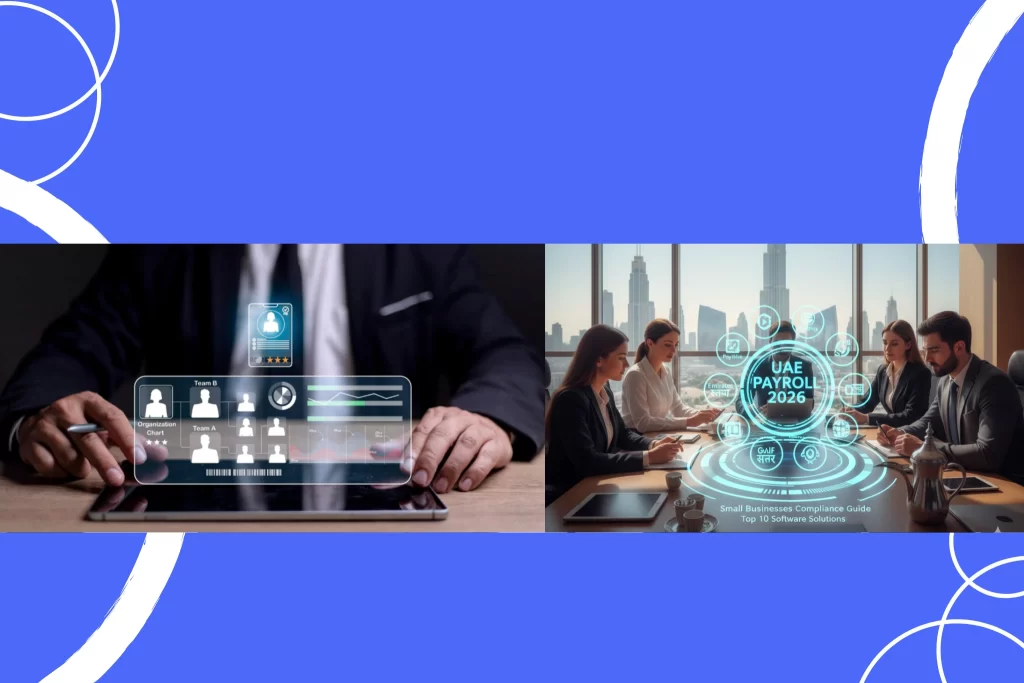
With every passing day, the United Arab Emirates is finding its place in the world as a business and talent hub. For HR professionals and business leaders alike, 2026 will be a pivotal year: one in which a proactive, strategic approach to Human Resources isn’t merely a competitive advantage but rather a necessity for compliance, retention, and growth.
The new landscape demands a shift from traditional administrative Human Resource Management System to a strategic, employee, and technologically advanced function. Here is the essential HR system in UAE business that must be mastered in 2026 to thrive.
DIGITAL TRANSFORMATION AND DATA DRIVEN HRMS SYSTEM: THE TECH IMPERATIVE:
Digital transformation for businesses in the UAE in 2026 is no longer optional but an imperative for efficiency and strategic insight. HRM System must embrace AI and automation fully.
AI – POWERED RECRUITMENT AND ONBOARDING IN HRMS:
Recruitment is perhaps the most data- intensive and time- consuming function HR , making it ripe for AI disruption. AI – powered features in the HRMS and Applicant Tracking System (ATS) modules streamline the process, focusing human efforts where they matter most .
Automation is moving beyond simple admin tasks to strategic talent acquisition:
- Faster, Smarter Hiring:
Use AI-powered tools to source candidates, screen CVs, and even conduct video interviews with sentiment analysis. This drastically reduces time – to – hire, freeing up human Resource (HR) System.
- Seamless Onboarding:
Automate the administrative parts of onboarding using HRMS (Human Resource Management Systems) to deliver a consistent, engaging, and high-impact experience for every new joiner.
- Automation Of Repetitive Tasks:
. Automated Screening Parsing:
AI can parse and score hundreds of resumes in minutes, extracting key information like work history, education , and skills and automatically populating the candidate profile in the HRMS. This saves recruiters countless hours spent on initial, tedious screening.
. Conversational AI (Chatbots):
AI chatbots integrated into the career page and the HRMS, can handle up to 80% of candidate inquiries. These bots provide instant, 24/7 personalized engagement.
. Automated Scheduling:
Advanced tools eliminate the tedious back-and-forth for schedule for HRMS Software that instantly finding mutually available time for candidates, recruiters, and hiring managers and automatically sending calendar invites, reducing scheduling errors and delays.
PEOPLE ANALYTICS AND DATA – DRIVEN DECISIONS:
A digitally transformed HR is inherently data-driven. This is where the true strategic value emerges. Data – driven HRMS, or People Analytics, Is the practice of using data, statistical models, and technology to inform and guide decisions across all HR areas, replacing guesswork and intuition with quantifiable facts.
Instead of waiting for the annual engagement survey, modern HRMS Software uses AI – powered pulse surveys and sentiment analysis to measure engagement in real time. Instead of subjective performance reviews, date-driven systems track objective metrics, goal alignment, and continuous feedback to improve fairness and transparency. This analytic capability impacts critical business outcomes.
- Predictive Retention Strategies:
By analyzing factors like compensation, tenure, engagement scores, and manager feedback, predictive models can flag employees at high risk of turnover. This allows management to intervene proactively with tailored retention strategies, potentially reducing costly staff exits by up to 25%, according to some reports.
Use HRMS Software data analytics to forecast workforce, such as potential employee turnover, identify key skill gaps, and measure the effectiveness of wellness or training programs.
- Optimized Talent Acquisition:
Advanced Applicant Tracking System (ATS) uses AI to screen candidates based on skills and cultural fir, eliminating unconscious bias and drastically cutting the time-to-hire.
- Targeted Skills Development:
Data identifies specific Skill gaps within the workforce, allowing HRMS to create personalized learning pathways and ensure training ROI aligning development with actual business needs, transforming learning from a compliance checkbox into a strategic asset.
OVERCOMING THE HURDLES: THE PATH FORWARD:
Implementing a data – driven HR system is a marathon, and requires careful navigation of key challenges:
- Data Governance and privacy:
Centralizing vast amounts of personal employee data requires strict adherence to globally the HRMS software measure. Trust must be maintained at all costs.
- Change Management:
The new system that HRM system software will not fail because of technology, but because of poor user adoption. A continuous, transparent communication and training plan that clearly highlights the personal benefits for every employee and manager is essential for successful change management.
- Culture Of Analytics:
The HR team must develop new competencies. They must transition from being record-keepers to being data storytellers and strategic advisors, capable of interpreting complex analytical findings for senior business leaders.
INVESTING IN LEARNING AND DEVELPOMENT
Funding upskilling and reskilling initiatives is today a key HRM System activity, driven by the need to fill skill gaps generated by automation and new technologies such as AI.
- Personalized learning:
Implement AI–driven personalized learning tools that identify individual skill gaps and provide tailored educational content and mentorship programs.
- Focus on ‘soft’ skills:
Emphasize the training of behavioral and life skills that include critical thinking, emotional intelligence, resilience, and complex problem–solving- skills that complement rather than compete with automation.
BUILDING STRONG LEADERSHIP AND SUCCESSION PLANNING:
In today’s fast-paced business environment, relaying external hires to full key vacancies is a risky and often costly gamble. The true secret to sustained success and organizational resilience lies not in recruiting, but in cultivating leadership from within. Building strong internal leadership and executing.
Leadership development is essential for long-term business growth. In 2026, HR teams must invest in identifying and training future leaders to ensure stability and continuity.
- Mentorship and coaching programs
- Skill-based leadership training
- Creating a clear succession plan for critical roles.
HR SYSTEM AS A STRATEGIC PARTNER:
For UAE businesses in 2026, HRMS software is no longer a back – office support function. It is a strategic partner that guides the company through mandatory legal compliance, fosters a resilient and high–performing workforce, and leverages technology for a competitive edge. By focusing on Emiratization, compliance, holistic employee wellness, and digital transformation, companies can ensure they are not just compliant, but future – ready in the dynamic UAE market.