Token Queue Management System
Long lines are the bane of the modern service experience. Whether you’re at the bank, a hospital, a government office, or a busy retail store, the sight of a snaking, disorganized queue instantly drains morale and creates frustration. But a silent revolution has been underway, transforming this chaotic bottleneck into a stress-free experience: The Token Queue Management System (QMS).
Far from the old manual ‘take a number’ systems, today’s digital token system is an intelligent, automated solution that manages customer flow, minimizes waiting-time frustration, and provides businesses with powerful operational insights. It has fundamentally changed the way we wait, shifting the focus from simply standing in line to managing productive time.
WHAT EXACTLY IS A TOKEN QUEUE MANAGEMENT SYSTEM?
At its core, a Token Queue Management System is an intelligent framework designed to manage the flow of visitors requesting service. Instead of forming a physical line, customers are issued a unique token—a number or digital ID – that secures their place in a virtual queue.
This concept formalizes the sequence of service. When a customer arrives, they identify the service they need deposits, new account, pharmacy pickup. The system then assigns them the next available number for the specific service type. This simple mechanism eliminates the “first – come, first-served” ambiguity of physical lines and directs customers to the correct service channel immediately.
THE ECOSYSTEM OF A MODERN TOKEN QUEUE MANAGEMENT SYSTEM:
A sophisticated token system comprises several interconnected components that work in harmony:
1.Token Generation Interface of token queue management system:
This is the customer’s first interaction. It could be a self – service kiosk where they select their required service and receive a printed ticket or a digital token via SMS / email. Advanced system allow remote token generation via mobile apps or a website.
2.Central Software and Analytics of token queue management system:
This is the brain of the operation. It manages the queue logic, prioritizes customers (“e.g, Deposits , New Account, Passport Renewal”) and receive a printed ticket or a digital token via SMS / email. Advanced system allows remote token Queue Management System generation via mobile apps or a website.
3.Operator Console (calling Unit) of token queue management system:
Staff use a simple interface — a desktop application or tablet—to call the next customer. When the staff member clicks “Call Next,” the system registers the action, updates the main display, and often triggers an audible announcement.
4.Queue Display System of token queue management system:
Strategically placed digital screens in the waiting area display the current token Queue Management System being served, the designated counter number, and often the estimated wait time. This provides transparency and clarity.
THE TRANSFORMATIVE BENEFITS OF GOING DIGITAL:
The shift from physical lines to a virtual token system offers compelling advantages for both customers and the business.
ENHANCING THE CUSTOMER EXPERIENCE:
The most immediate benefit is the massive improvement in customer satisfaction, which directly impacts brands loyalty and reputation.
- Reduces Perceived Wait Time:
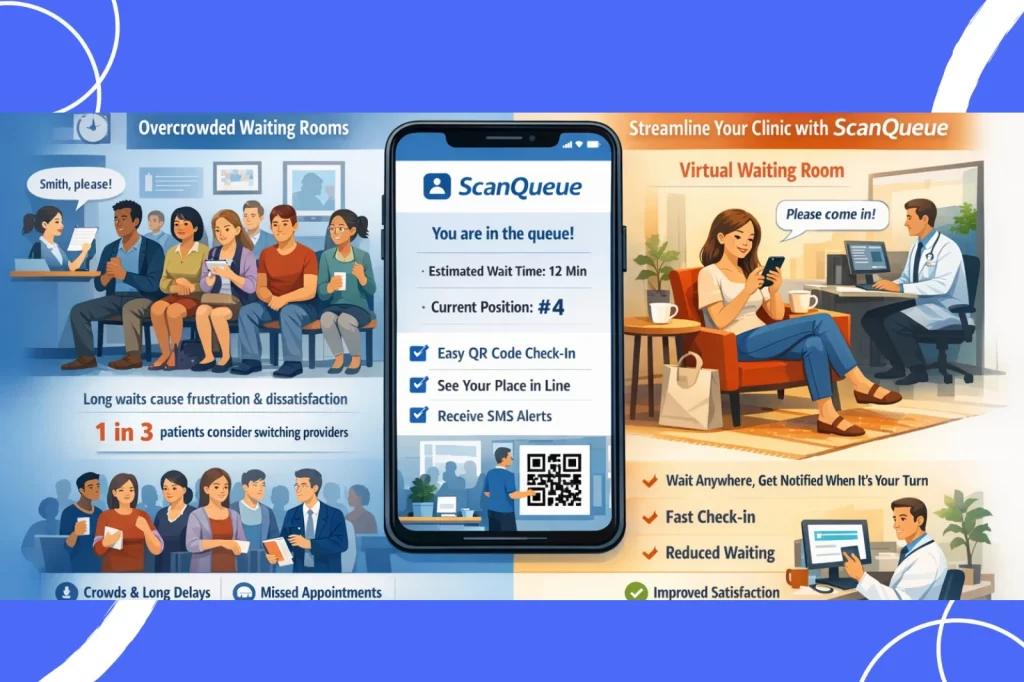
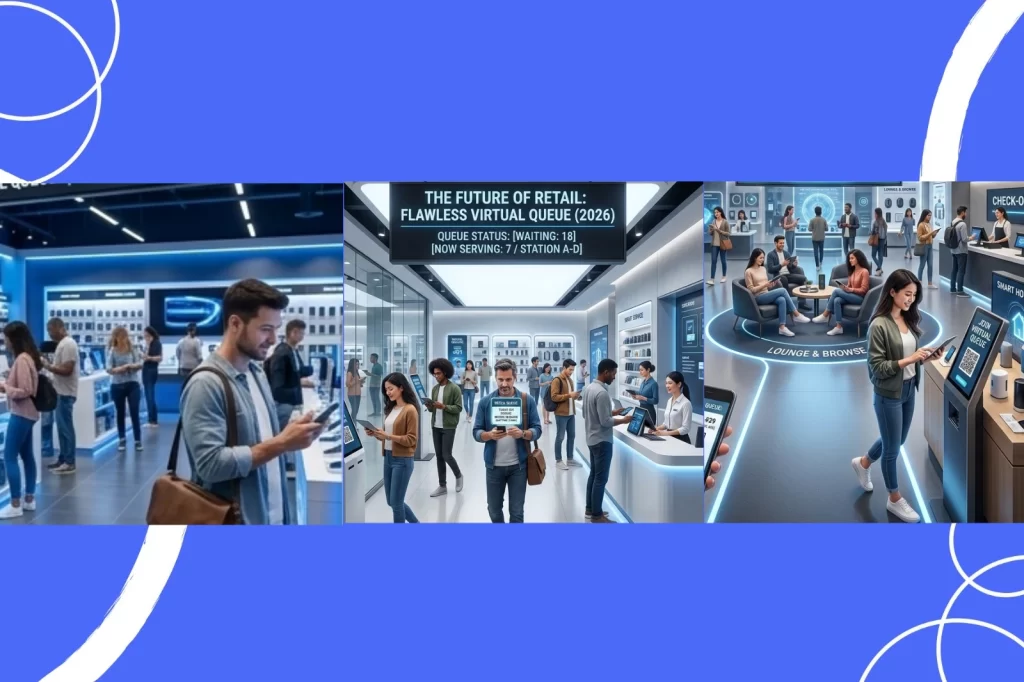
When a customer has a token of QMS and is aware of their place in the queue, they are no longer tethered to a physical spot. They can sit comfortably, browse retail displays, read, or wait in a relaxed area. By allowing customers to use their waiting time productively, the perceived duration of the wait dramatically decreases.
- Facilitates Virtual Queuing:
This is a game – changer. Customers can join the queue via their phone, receive an estimated service time, and get an SMS alert when their turn is approaching. This ensures they arrive just in time for service, eliminating unnecessary loitering and maximizing their efficiency.
- Ensures Fairness And Transparency:
The token number guarantees a clear, first-come, first- served sequence for that specific service category, eliminating confusion, disputes, and the anxiety of line-jumpers. The real-time display confirms that the process is fair and actively moving forward.
DRIVING OPERATIONAL EFFICIENCY:
For businesses, a Queue Management System is a powerful management tool that optimizes resource allocation and staff productivity, leading to direct cost savings and improved throughput.
- Smoother Flow For Complex Services:
In environments like hospitals or government centers, customers often need multiple services like doctor visit, payment , check in, An advance token QMS software can manage the flow between these stages, automatically transitioning a customer from one queue to the next without them needing to re-registered.
- Optimized Staff Allocation:
The central dashboard provides real-time data on queue length and service demand across different departments. QMS Managers can instantly see that the “account opening” queue is backing up while the “general Inquiry” queue is quiet. They can then dynamically reassign staff to busy counters or services to prevent bottlenecks before they become severe problems.
- Increased Staff Focus And Reduced Stress:
Staff members are freed from the stressful, unproductive task of managing and policing physical lines. They no longer must direct confused customers or deal with line disputes. Instead, they can focus 100% on providing quality service to the customer in front of them, leading to higher staff morale and better service quality.
THE POWER OF DATA AND ANALYTICS:
Perhaps the most important long term value of a digital token of Queue Management System lies in its ability to generate powerful, actionable data. The system automatically records metrics that were impossible to track manually:
- Staff productivity:
Measuring the service time and transaction volume handled by individual staff members or teams.
- Service Abandonment Rate:
Tracking how many customers take a token but leave before being served. A high abandonment rate is a clear red flag indicating excessive wait times or a poor waiting environment.
- Average Wait Time (AWT):
The total time a customer spends in the queue management system before being served.
- Average Service Time (AST):
The time a staff member spends with customer for a specific service.
- Peak Hour Identification:
Pinpointing the exact times of the day, week, or month when demand is highest for each specific service type. This is invaluable for accurate staffing and scheduling.
A Token Queue Management System is a simple logic IT solution that ends managerial guesswork. By continuously tracking data like average wait time and peak hour traffic, managers gain precise intelligence.
The before and after AST reports will tell the story. This continuous feedback loop drives perpetual service improvement.
Conclusion:
The Token Queue Management System is far more than just a digital version of a paper ticket , it is a holistic service management platform. It transforms the often – dreaded experience of waiting into a clear, transparent, and respectful part of the customer journey. By automating queue flow, enhancing transparency, boosting staff productivity, and delivering powerful operational insights, the token system is an essential investment for any organization committed to improving customer satisfaction and driving long-term efficiency. The era of the chaotic , frustrating line is over, replaced by the organized, intelligent flow of the digital token.