DIGITAL QUEUING SYSTEMS
In the modern service economy, time is the only currency we cannot print more of. As we navigate 2026, the traditional physical line—that stagnant, snake-like formation of frustrated individuals—has become a symbol of operational failure. To stay competitive, forward-thinking businesses are no longer just “managing” crowds; they are revolutionizing their entire customer flow through Digital Queuing Systems.
But what does it actually mean It isn’t just about replacing a paper ticket with a digital one. It is about rethinking the entire journey from the moment a customer thinks about visiting your location to the moment they walk out the door.
- THE ANATOMY OF A FRICTIONLESS JOURNEY:
The revolution begins with the removal of physical barriers. In a traditional setup, the customer’s journey is interrupted the moment they see a long line. This “visual barrier” leads to balking—where a customer sees the wait and decides your service isn’t worth the time.
A digital queuing system eliminates this barrier by making the queue invisible and “liquid.”
- Remote Entry:
Customers can join the line via a mobile app, website, or QR code before they even arrive at your storefront.
- Virtual Waiting:
Once in the system, the customer is no longer tethered to a specific square foot of floor space. They are free to browse other aisles, grab a coffee nearby, or wait in the comfort of their car.
- Dynamic Communication:
Through automated SMS or push notifications, the system keeps the customer informed. “You are 3rd in line; please head to the service area.” This transparency replaces anxiety with anticipation.
- THE PSYCHOLOGY: WHY DIGITAL WINS:
To understand why digital queuing system is revolutionary, we have to look at queueing System Theory and human psychology. There are two types of wait times: Actual and Perceived.
Digital systems are masters at manipulating perceived time. When a customer stands in a physical line, they are “unoccupied.” Research shows that unoccupied time feels significantly longer than occupied time. By freeing the customer from the line, you allow them to “occupy” their time however they choose.
Furthermore, digital queuing systems solve the “Fairness Phobia.” Nothing creates a negative customer experience faster than the “Slower Lane Syndrome”—the feeling that the line next to you is moving faster. A centralized digital brain ensures a “First-In, First-Out” (FIFO) logic that is mathematically perfect, removing the stress of choosing the “wrong” line.
- TURNING DATA INTO OPERATIONAL GOLD:
The most revolutionary aspect of a digital queuing system for the business owner isn’t the front-end experience—it’s the back-end data.
In a traditional line, you have no idea how many people left because the line was too long. You don’t know the exact second a service representative started or finished a task. With a digital queuing system, every movement is logged.
- BOOSTING THE BOTTOM LINE: THE ROI OF FLOW:
Revolutionizing flow isn’t just a “nice-to-have” for customer service; it is a direct contributor to the bottom line.
- Increased Basket Size:
In retail, “waiting time” is transformed into “browsing time.” A customer who isn’t stuck in a line is a customer who is still shopping. Businesses using digital queuing system often report a 15–20% increase in impulse purchases.
- Reduced Staff Burnout:
There is an immense psychological toll on employees who have to look at a line of fifty angry people. Digital queuing systems hide the “crowd,” allowing staff to focus on the human being currently in front of them, leading to better service and lower staff turnover.
- Space Optimization:
Physical queues require massive amounts of floor space. By digitizing the queue, businesses can reclaim that real estate for high-margin displays, additional seating, or smaller, more efficient storefronts.
- CASE STUDIES IN REVOUTION:
The Healthcare Shift
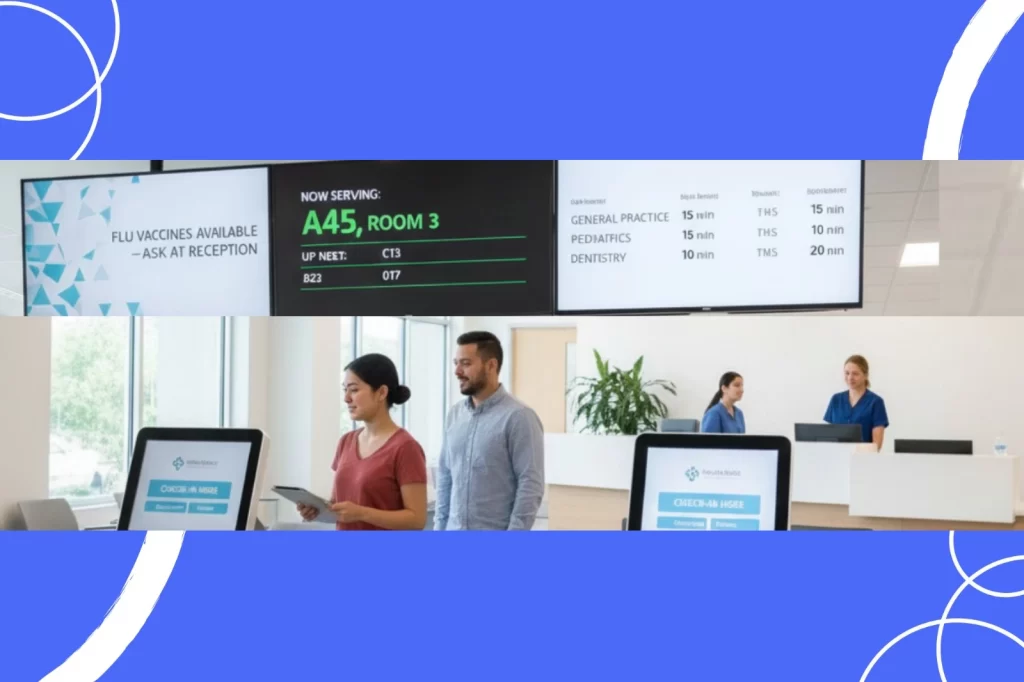
In clinics, the waiting room has long been a hub for cross-contamination and stress. Digital queuing system allows patients to wait in their cars, receiving a text when the doctor is ready. This hasn’t just improved “flow”; it has improved public health outcomes by reducing patient density in confined spaces.
The Modern Bank
Banks have moved away from the “teller line” to a “consultation model.” Customers check in for specific services (mortgages, new accounts, wire transfers). The system routes them to the employee with the specific skill set required, ensuring the flow is not just fast, but accurate.
- IMPLEMENTING THE REVOLUTION:BEST PRACTICES:
Transitioning to a digital queuing system requires more than just software; it requires a strategy. To truly revolutionize your flow, consider the following:
- Omnichannel Integration:
Ensure your queue can be joined via your app, your Google Maps listing, and a physical kiosk on-site.
- Clear Signage:
Even a digital queuing system needs physical cues. Use digital signage to display the current “Now Serving” numbers so that even those without phones feel informed.
- The “Human” Safety Net:
Always have a staff member (a “floor manager”) equipped with a tablet to assist those who may be less tech-savvy. The revolution should be inclusive, not exclusive.
- LOOKING AHEAD: AI AND PREDICTIVE QUEUING:
As we look toward the end of 2026, the next step in this revolution is Predictive Flow. Using AI, modern digital queuing systems are beginning to predict waits before they happen. Imagine a system that sends a notification to your loyal customers saying, “We notice you usually visit on Tuesdays; today is 30% quieter than usual. Come in now with zero wait!”
This isn’t just managing a line; it’s actively directing human traffic to optimize the efficiency of the entire city.
CONCLUSION:
A digital queuing system is an investment in the future of your brand a it will change the way you manage customer flow in your business or company. This shows that you value the time of your customers, as well as giving your managers the equipment they need in managing a precision operation.
The velvet ropes are coming down. The floor markers are being peeled up. The age of the static line Is finished. In its place is a fluid, digital, and deeply human experience that takes a prominent step towards respecting the most valuable asset that we all possess time.