Token Management System Installation Process, Implementation, Features, Benefits & Best Practices
Customer waiting time is arguably the greatest problem that businesses and public service providers face in Dubai. Be it a bank, a hospital, a government office, a retail business, telecommunications office, or any other type of business, efficient handling of customers is very important.
The token system allows business entities to manage their queue lines more effectively and make the whole process much more efficient. Nevertheless, choosing the best product alone is not sufficient since it needs to be installed properly and used effectively.
This guide explains everything businesses need to know about choosing a Token Management System supplier in Dubai and implementing a successful installation.
What is a Token Management System?
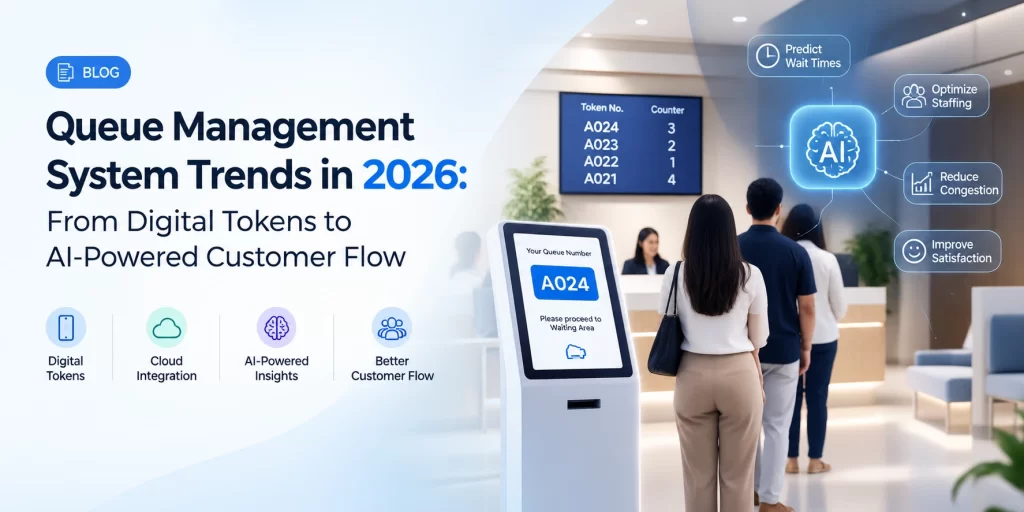
A Token System is a digital queue solution designed to organize customer flow by issuing electronic or printed tokens and directing visitors to service counters in an orderly manner.
It typically includes:
- Token dispensing kiosk
- Digital display screens
- Counter calling devices
- Queue management software
- Reporting dashboard
- Customer notification system
By automating queue operations, a Token System reduces manual effort and ensures structured customer handling across all service points.
Do Firms in Dubai Need Token Management Systems?
High quality of services and promptness is what Dubai is known for. The negative effects of queueing can be quite drastic on the customer’s perception of the firm. So a token management is essential in this high traffic environment.
A Token Management System helps organizations:
- Reduce waiting time
- Improve service efficiency
- Eliminate queue confusion
- Enhance customer experience
- Monitor staff performance
- Generate real-time reports
- Support digital transformation
- Improve customer retention
The sectors that are commonly utilizing the Token Management are banks, hospitals, government organizations, embassies, retailers, telecommunication companies, and schools.
Step 1: Business Requirement Assessment
The first stage in implementing a Token Management System is analyzing operational requirements.
Key factors include:
Visitor volume – daily customer traffic
Number of counters – service points required
Service categories – different queue types
Multi-branch operations – centralized control needs
Language support – multilingual interface for Dubai’s diverse population
This step ensures that the Token System is designed according to real business workflows and customer handling requirements.
Step 2: Selection of the Right Supplier in Dubai
It is important to select an experienced Token Management System supplier in Dubai for successful implementation.
An ideal Token Management supplier will offer:
- Local market expertise
- Customizable system configuration
- Integration of hardware and software
- Ongoing technical support
- Scalable design
A good Token Management System plan helps to ensure success.
Step 3: Site Survey and Planning
Before installation begins, a detailed site survey is conducted to design efficient customer flow.
This includes analyzing:
- Reception layout
- Waiting area capacity
- Counter positions
- Network infrastructure
- Power supply points
- Display screen placement
Proper planning ensures the Token System improves queue flow and minimizes customer congestion.
Step 4: Hardware Installation
This stage involves setting up all physical components of the Token Management System.
Token Kiosk
Placed at entry points where customers collect tokens.
Digital Display Screens
Installed in visible locations showing:
- Token numbers
- Counter assignments
- Service updates
Counter Devices
Used by staff to call and manage customers efficiently.
Audio System
Voice announcements guide customers and reduce confusion in busy environments.
Step 5: Software Configuration
Once hardware installation is done, the Token System software configuration begins.
This includes:
- Service category setup
- Counter mapping
- Queue structure design
- Priority queue settings
- User role and access control
Priority can be assigned to VIP customers, senior citizens, or emergency cases for faster service handling.
Step 6: Network Integration
Modern systems integrate seamlessly with business IT infrastructure.
The Token Management System can connect with:
- Internal networks
- Cloud platforms
- CRM systems
- ERP solutions
- Appointment booking systems
This integration ensures smooth data flow and real-time synchronization across departments.
Step 7: Testing and Quality Check
Before launch, the system undergoes complete testing.
Testing includes:
- Token issuance accuracy
- Display synchronization
- Counter calling system
- Audio announcements
- Reporting functionality
This ensures the Token Management operates without errors before going live.
Step 8: Staff Training
Proper training is essential for effective use of the Token System.
Training covers:
- Token issuance process
- Queue handling procedures
- Counter operations
- Supervisor monitoring tools
- Administrative controls
Well-trained staff ensures smooth daily operations and better customer handling.
Step 9: System Launch
After testing and training, the Token System is deployed for live operations.
During the initial phase, support is provided for:
- On-site assistance
- Performance monitoring
- Issue resolution
- User guidance
This ensures a smooth transition from manual queues to automated queue management.
Step 10: Maintenance and Support
Ongoing maintenance is essential for long-term efficiency.
Support services include:
- Software updates
- Hardware servicing
- Remote troubleshooting
- Performance optimization
- System upgrades
A properly maintained Token System ensures consistent performance and reliability.
Key Features of a Modern Token Management System
A modern Token System in Dubai should include:
- Touchscreen token kiosks
- QR code token generation
- Mobile queue booking
- SMS notifications
- Cloud-based dashboard
- Real-time analytics
- Multi-branch management
- Multilingual interface
- Appointment integration
- Customer feedback system
This helps improve efficiency and the customer experience.
Benefits of Professional Installation
Professional setup ensures:
- Faster deployment
- Reduced technical risks
- Optimized queue flow
- Stable system performance
- Improved staff efficiency
- Higher return on investment
Expert installation maximizes the performance of the Token Management System.
It is very essential that companies in Dubai invest in a token system in order to have better customer service experience and improve their efficiency. Each and every process from requirement analysis through installation and training contributes to the success of the system.
Through the proper implementation of token systems, organizations will be able to provide faster and efficient services to customers.