Integrating an Emirates ID Reader into Your Workflow
A customer walks up to your counter. They hand over their Emirates ID. Your staff member squints at it, starts typing — slowly — into the system. Name spelled wrong. ID number off by one digit. Customer has to repeat themselves twice. By the time the entry is done, there’s a queue of four people behind them, and everyone’s quietly annoyed.
This is still happening in businesses across the UAE in 2026.
The Real Cost of Doing Things the Old Way
Most business owners don’t calculate what manual ID processing actually costs them. They should.
If your staff spends four minutes per customer on data entry and you’re serving 80 customers a day, that’s over five hours of pure admin time — daily. Not including time spent correcting mistakes or managing compliance gaps that surface during audits.
An Emirates ID Reader doesn’t just speed things up. It changes the economics of your front-desk operation entirely.
What Actually Happens When You Scan Instead of Type
Here’s something people don’t realize until they’ve used one: the difference isn’t just speed. It’s the whole feeling of the process.
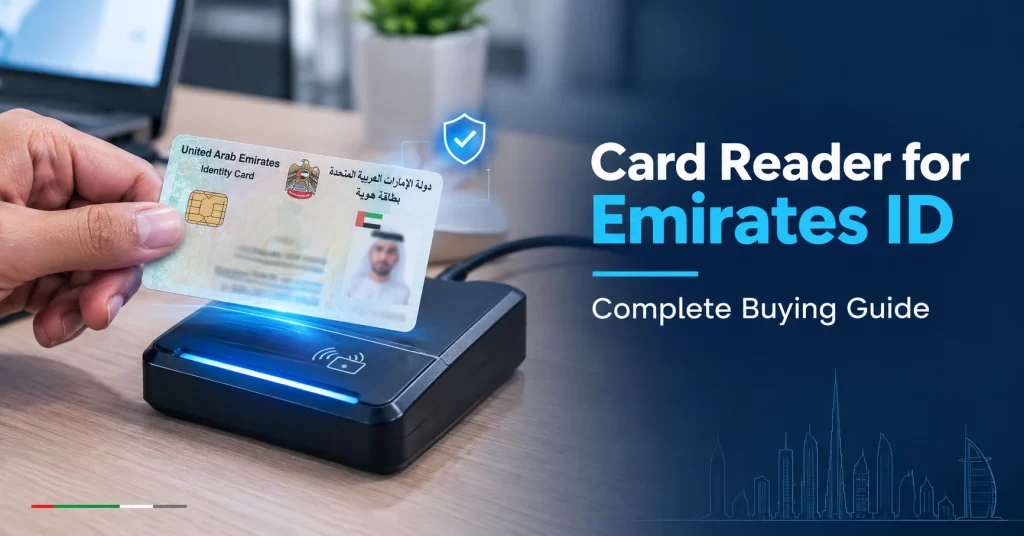
When a customer presents their card and your staff simply scans it — name, nationality, ID number, visa status, all pulled in under five seconds — there’s no awkward pause. No “could you spell that again?” The transaction just moves forward.
An Emirates ID Reader pulls data directly from the encrypted chip that the UAE Federal Authority for Identity and Citizenship encodes on every national ID card. What lands in your CRM is the official record, not a best guess typed under pressure.
Compliance Isn’t Optional — See How an Emirates ID Reader Makes It Easier
If you operate in financial services, you already know how seriously UAE regulators take KYC (Know Your Customer) and AML (Anti-Money Laundering) requirements. The Central Bank of UAE doesn’t accept “we made a manual entry mistake” as a valid explanation during an audit.
An Emirates ID Reader builds compliance into the moment of onboarding rather than treating it as a separate step. Every scan creates an automatic, timestamped data record. The identity is verified at the point of capture, not reviewed later by a compliance officer who’s working from potentially incorrect information.
That audit trail is genuinely valuable — not just for passing inspections, but for building the kind of institutional confidence that regulators notice over time.
Fraud Is More Sophisticated Than You Think
Many business owners assume identity fraud is something that happens to banks and hotels, not to them. This assumption is increasingly wrong.
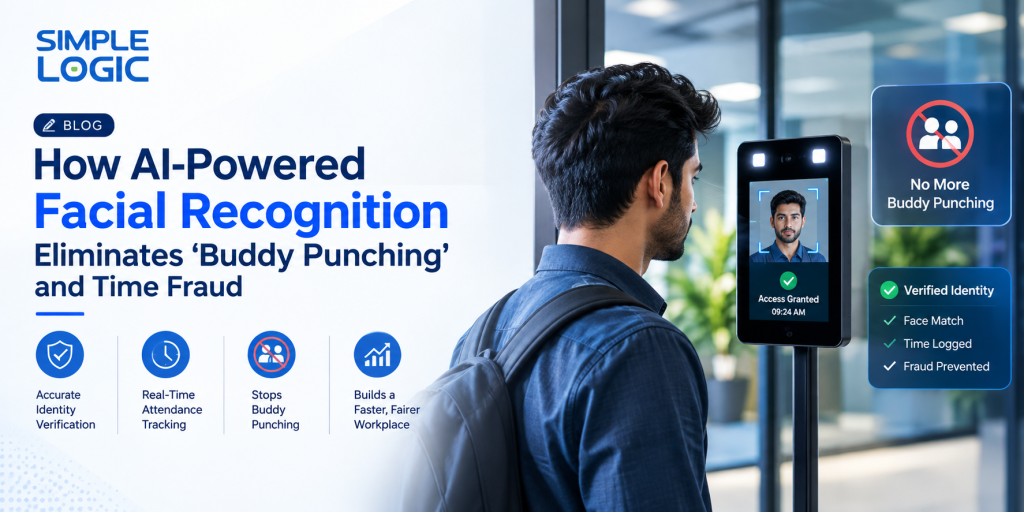
Sophisticated counterfeit documents can fool an untrained eye. What they cannot fool is an Emirates ID Reader that cross-references chip data against the printed information on the card. If someone presents a tampered ID, the mismatch gets flagged before the transaction moves forward — something staff, at high customer volumes, simply cannot catch manually every time.
The ROI Conversation Is Shorter Than You’d Expect
People sometimes hesitate because they’re thinking about it as a tech purchase rather than an operational decision. Reframe it: what’s one compliance penalty worth? What’s the value of two extra hours of productive staff time per day?
Most UAE businesses find their investment recovered well within the first year.
It Works Differently Depending on Your Sector
One of the underappreciated things about this technology is how differently it gets applied across industries — and how well it adapts.
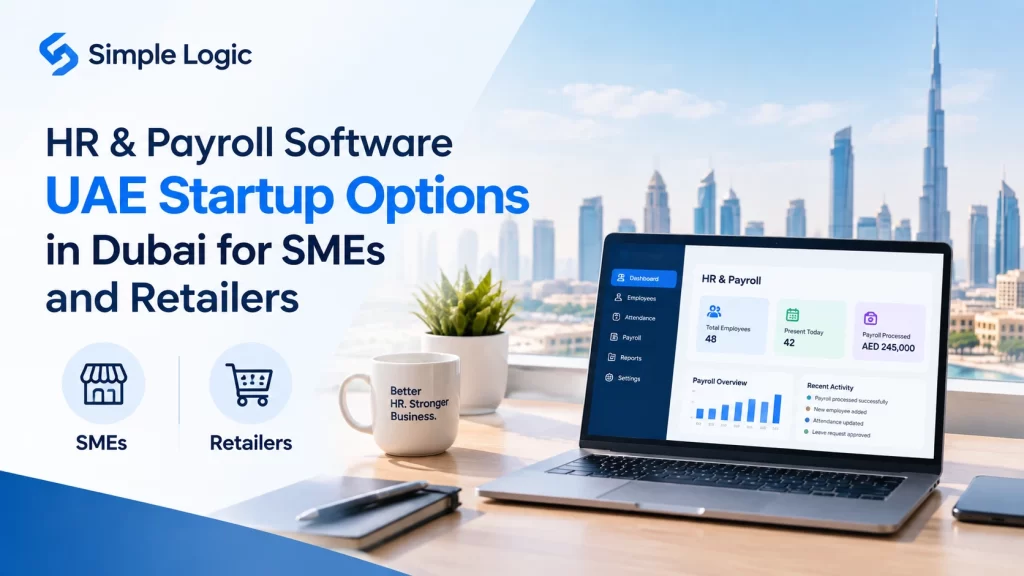
In banking and finance, it handles KYC at account opening and makes loan onboarding significantly less painful for both staff and customers. In healthcare, patients aren’t filling out forms at the reception desk anymore; their details are already in the system before they’ve sat down, and nothing gets transcribed incorrectly along the way. Hotels and serviced apartments use it to satisfy DTCM requirements at check-in without adding friction to the guest experience. In HR departments, new employee onboarding data flows directly into payroll systems without anyone re-typing anything.
The pattern is the same across all of them — an Emirates ID Reader replaces a manual, error-prone step with one that’s automated and reliable.
Scaling Without Scaling Problems
Multiple locations across Dubai, Abu Dhabi, and Sharjah create data consistency challenges. Staff entering information differently across sites produces reconciliation headaches at the group level.
Cloud-connected Emirates ID Reader deployments solve this cleanly — data captured at any branch syncs to a central system in real time, giving your team a single accurate view without manually consolidating spreadsheets.
What to Look for Before You Buy
Not everything labeled as an Emirates ID Reader is built the same way. Some devices only read the visual zone — the printed text on the card surface. Better ones read the embedded chip, giving you verified, encrypted data rather than just a digital image of what’s printed. Companies like Simple Logic IT specialize in exactly this — helping UAE businesses choose and deploy readers that connect properly with their existing infrastructure, rather than creating a new layer of manual work.
Also check whether it integrates with the systems you already use. A scanner that needs a manual export step to push data into your CRM hasn’t solved the problem — it’s just moved it.
Closing Thought
The UAE has built one of the most sophisticated digital identity infrastructures in the world. The national ID card itself is a remarkable piece of technology. An Emirates ID Reader is simply the tool that lets your business actually use what’s already there.
Faster onboarding, cleaner data, stronger compliance, better fraud protection — none of this requires rebuilding your operation from scratch. It just requires connecting the right device to the right workflow.
Looking for the right Emirates ID Reader for your business setup? Simple Logic IT works with UAE businesses across sectors to assess current systems, recommend the right hardware, and handle the full integration — so you’re not just buying a device, you’re actually solving the problem.