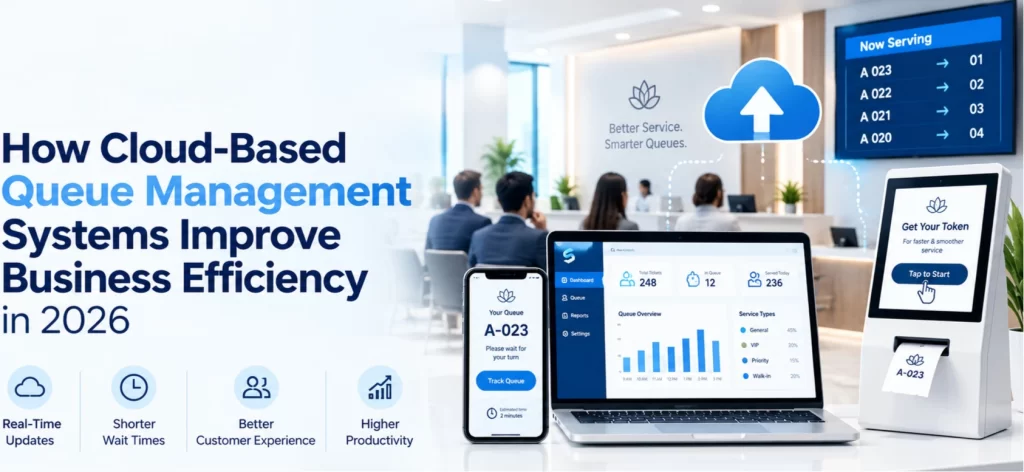
Features Every Clinic Queuing System Should Have
1. Scheduling Appointments Online
One characteristic of an efficient queue management system is enabling patients to make appointments online either through the website or mobile application.
The benefits of this system include:
- 24/7 appointment booking
- Reduced scheduling conflicts
- Lower administrative workload
- Improved appointment accuracy
Incorporation of appointment scheduling into the clinic calendar will help to avoid cases of overbooking and improve smooth patient flow.
2. Virtual clinic queuing system
Virtual queuing has emerged as one of the most important functions in clinics. Instead of waiting at crowded reception desks, patients can track their queue position through their mobile phones.
A virtual queue system enables patients to:
- Join the queue digitally
- Track estimated waiting times
- Wait from their car or nearby location
- Receive notifications when their turn approaches
This feature improves convenience while reducing congestion inside the clinic.
3. Real-Time Queue Updates
Patients appreciate transparency. A modern clinic queuing system should provide real-time updates on waiting times and queue progress.
Notifications can be delivered through:
- SMS
- Mobile applications
- Digital display screens
Real-time communication reduces patient frustration and helps clinics manage expectations effectively.
4. Waiting Time Prediction Using AI
Artificial intelligence is revolutionizing health care processes. AI-based queue management systems evaluate appointment lengths, doctors’ schedules, and past records to predict waiting time accurately.
Advantages include:
- Improved patient satisfaction
- Reduced waiting room congestion
- Optimized doctor schedules
AI also helps clinics respond quickly to unexpected delays by automatically adjusting queue estimates.
5. Self-Service Check-In Kiosks
Self-service kiosks make the check-in process for patients easier by reducing reliance on receptionists.
Patients can:
- Verify appointments
- Update personal information
- Scan identification documents
- Print queue tickets
- Complete digital registration forms
This speeds up the registration process and minimizes human error.
6. Mobile App Integration
Today’s patients expect healthcare services to be available via mobile applications. A proper queue management system will have to incorporate itself into the mobile application.
Features may include:
- Appointment booking
- Queue tracking
- Digital check-in
- Appointment reminders
- Medical notifications
Mobile access improves convenience while encouraging patient engagement.
7. QR Code Check-In
Using QR codes can allow for a touchless and easy way of checking in for an appointment. All that needs to be done is scanning the QR code using a smartphone to register oneself into the queue.
Benefits include:
- Faster registration
- Reduced waiting lines
- Contactless interactions
- Improved operational efficiency
QR code check-in is particularly useful during busy clinic hours.
8. Multi-Department Queue Management
Most healthcare organizations have different departments such as general medicine, pediatrics, dermatology, laboratories, and pharmacy.
An effective clinic queuing system needs to be able to manage several queues at once and allocate the patient to the right department automatically.
It will help avoid congestions and enhance patient flow through the facility.
Dashboard and Performance Metrics
Data-driven decisions are vital for enhancing clinic performance.
The following are some of the information that should be displayed on the dashboard:
- Average patient waiting time
- Daily patient volume
- Peak operating hours
- Staff productivity
- Appointment completion rates
- Missed appointments
Analytics help administrators identify inefficiencies and optimize staffing schedules.
10. Automated Appointment Reminders
Missed appointments cost clinics valuable time and revenue.
Automated reminders sent through SMS, email, or mobile apps help patients remember upcoming visits.
Reminder systems can also allow patients to:
- Confirm appointments
- Reschedule appointments
- Cancel appointments
This feature significantly reduces no-show rates.
11. Cloud-Based Access
Queue management systems that utilize cloud computing are more flexible than traditional on-site software programs.
They provide the following advantages:
- Secure remote access
- Automatic software updates
- Lower maintenance costs
- Easy scalability
- Centralized data management
Through cloud technology, clinic managers have the ability to oversee clinic operations remotely.
12. Strong Data Security
Protecting patient information is a top priority. Clinics should choose queue management software that includes robust security features such as:
- Data encryption
- Multi-factor authentication
- Role-based user access
- Regular security updates
- Secure cloud storage
Good security ensures that patient information remains protected and helps to ensure compliance with health care privacy laws.
Reasons for Choosing This Feature
The choice of clinic queuing system goes beyond cutting down on wait time. The modern queue management system increases efficiency, improves patient experience, optimizes staff productivity, and contributes towards good health care.
Through adopting queue management technology, clinics will be able to:
- Reduce patient waiting times
- Improve appointment scheduling
- Increase staff efficiency
- Minimize administrative errors
- Enhance patient communication
- Create an organized clinic environment
As the healthcare industry continues with digital transformation, the clinics which will be equipped with the intelligent queue management system will have an easier time meeting the growing demands of their patients.
Conclusion
Healthcare in the future is all about ensuring efficiency and patient-centered services, which can only be achieved through an intelligent clinic queuing system. Characteristics like online appointment booking, virtual queues, intelligent waiting time prediction, self-check-in kiosks, mobile capabilities, push notifications, reporting capabilities, and cloud-based access are some of those features.
In choosing the best queue management system in 2026, consider a system that can scale, be user-friendly, be secure, and can easily integrate into your clinic operations.